The blockchain space has matured rapidly, but one truth remains constant: creating a token is easy, while maintaining its long-term value is hard. Thousands of tokens are launched every year, yet only a small percentage survive beyond initial hype. The difference between short-lived projects and sustainable ecosystems often comes down to two critical elements — how the token is created and how its supply is managed over time.
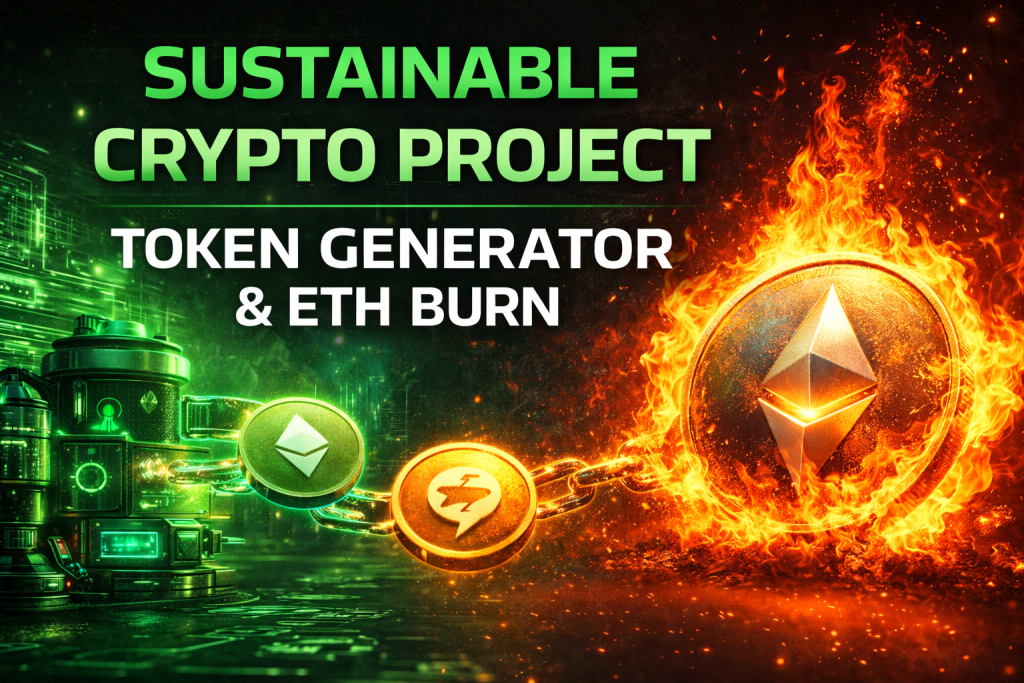
This is where a modern token generator and a well-planned Ethereum burn strategy come together. By combining efficient token creation with transparent ETH burn mechanisms, projects can launch faster, operate more responsibly, and earn long-term trust from users and investors.
In this comprehensive guide, we’ll explore how token generators work, why Ethereum burn has become a cornerstone of modern tokenomics, and how these tools can be combined to build resilient blockchain ecosystems.
The Evolution of Token Creation on Ethereum
In Ethereum’s early years, launching a token required advanced programming skills, extensive testing, and costly audits. While this approach offered maximum customization, it also excluded many entrepreneurs, marketers, and communities who wanted to experiment with blockchain technology.
The emergence of the token generator changed everything.
What Is a Token Generator?
A token generator is a no-code or low-code solution that allows users to create ERC-20 tokens on Ethereum using pre-audited smart contract templates. Instead of writing Solidity code from scratch, users configure token parameters through a simple interface.
With a token generator, you can define:
- Token name and symbol
- Total supply and decimals
- Ownership and administrative rights
- Compatibility with Ethereum wallets and dApps
This approach dramatically lowers the barrier to entry while maintaining the security and transparency of the Ethereum network.
Why Token Generators Are Essential for Modern Projects
The speed of innovation in Web3 demands faster experimentation and iteration. Token generators enable this without compromising core blockchain principles.
Accessibility Without Sacrificing Control
A high-quality token generator gives creators full control over their token while removing unnecessary technical friction. This allows teams to focus on strategy, community, and utility rather than infrastructure.
Cost and Time Efficiency
Launching a token manually can take weeks or months. With a token generator, deployment can happen in minutes, freeing resources for growth and adoption.
Token Creation Is Only the Beginning
While token generation is a crucial first step, it is not the final goal. Many projects fail because they focus entirely on launch and neglect long-term economic design.
This is where Ethereum burn and ETH burn strategies become essential.
Understanding Ethereum Burn and ETH Burn
What Does Ethereum Burn Mean?
Ethereum burn refers to permanently removing tokens from circulation by sending them to an address that cannot be accessed. Once burned, these tokens are destroyed forever and cannot be recovered.
Ethereum itself introduced burning at the protocol level with EIP-1559, which burns a portion of transaction fees paid in ETH. This made ETH partially deflationary and highlighted the power of controlled supply reduction.
What Is ETH Burn in Tokenomics?
An ETH burn can refer to:
- Burning native ETH through network mechanisms
- Burning ERC-20 tokens built on Ethereum
For token projects, ETH burn principles are typically applied to ERC-20 tokens as part of a broader deflationary or supply-control strategy.
Why Ethereum Burn Has Become a Standard Practice
Ethereum burn mechanisms are no longer optional for serious projects. They serve both economic and psychological functions.
Supply Control and Scarcity
Unlimited or poorly managed supply leads to inflation and loss of value. Ethereum burn reduces circulating supply, helping balance demand and scarcity.
Transparency and Trust
Burn transactions are fully visible on the blockchain. Anyone can verify that tokens were permanently destroyed, which builds credibility and accountability.
Long-Term Value Alignment
ETH burn strategies often align the interests of founders, users, and investors by discouraging reckless minting and encouraging responsible growth.
Designing Tokenomics with Burn in Mind
The most successful projects plan their burn strategy before launching their token.
Fixed vs. Deflationary Supply
Some projects choose a fixed supply with occasional burns, while others implement continuous or event-based burn mechanisms. Both approaches can work if aligned with real utility.
Strategic Burn Triggers
Burns may be tied to:
- Platform usage
- Revenue milestones
- Governance decisions
- Ecosystem growth
The key is clarity and consistency.
How to Create a Token Using a Token Generator
Let’s look at the conceptual process of token creation using a token generator.
Step 1: Define Your Token’s Role
Ask critical questions:
- Is the token used for governance, payments, access, or rewards?
- Who will hold it and why?
- How does it create value within the ecosystem?
Clear answers shape every future decision, including ETH burn policies.
Step 2: Configure Token Parameters
Using a token generator, you define technical parameters such as supply and decimals. These decisions directly affect usability and perception.
Step 3: Deploy on Ethereum
Once configured, the token is deployed as a smart contract on Ethereum. From that moment, it becomes a permanent on-chain asset.
Managing Tokens After Launch
Post-launch management determines whether a project thrives or fades.
Key responsibilities include:
- Monitoring circulating supply
- Communicating tokenomics clearly
- Executing Ethereum burn events responsibly
- Maintaining trust through transparency
This is where specialized ETH burn tools play a critical role.
How Ethereum Burn Works for ERC-20 Tokens
ERC-20 tokens are burned through smart contract functions that permanently remove them from circulation.
Common Burn Approaches
- Manual burns: Initiated by token owners or administrators
- Scheduled burns: Executed at predefined intervals
- Revenue-based burns: Funded by platform income
- Community-approved burns: Governed by DAO voting
Each method supports different strategic goals but relies on the same Ethereum burn principle.
Importance of Secure Burn Tools
Burning tokens incorrectly can lead to errors, loss of credibility, or even security risks. A reliable ETH burn tool ensures:
- Tokens are permanently destroyed
- Transactions are verifiable on-chain
- No hidden minting or manipulation occurs
For Ethereum-based projects, dedicated tools simplify this process while reducing risk. You can learn more about ERC-20 burning here: https://20lab.app/tools/erc20/burn-tokens/ethereum/.
Combining Token Generator and Ethereum Burn for Sustainability
The real power lies in combining efficient creation with disciplined supply control.
Why This Combination Works
- Rapid token deployment
- Reduced development overhead
- Built-in sustainability mechanisms
- Stronger investor confidence
Projects that integrate Ethereum burn from the beginning signal maturity and long-term vision.
ETH Burn as a Signal of Project Quality
In a crowded market, perception matters. ETH burn strategies send a clear message.
Commitment to Long-Term Growth
Burning tokens demonstrates that a project values sustainability over short-term speculation.
Alignment with Community Interests
When supply reduction benefits long-term holders, trust and loyalty increase.
Verifiable Transparency
Every Ethereum burn transaction is publicly visible, eliminating ambiguity and speculation.
Use Cases Across the Web3 Ecosystem
Token generators and Ethereum burn mechanisms are used across many sectors.
DeFi Platforms
To manage governance tokens, control emissions, and stabilize ecosystems.
Gaming and Metaverse Projects
To prevent inflation of in-game currencies and maintain balanced economies.
DAOs
To align voting power with active participation and long-term commitment.
Startups and Platforms
To launch utility tokens efficiently while maintaining supply discipline.
In every case, ETH burn supports healthier token economies.
Best Practices for Implementing ETH Burn
To maximize effectiveness and credibility:
- Publish a clear burn policy
- Avoid excessive or arbitrary burns
- Align burns with real economic activity
- Communicate transparently with users
Burns should support utility, not replace it.
Why Ethereum Remains the Leading Choice
Ethereum continues to dominate token creation and burn strategies due to:
- Mature ERC-20 standards
- Strong security and decentralization
- Broad wallet and exchange support
- Extensive tooling ecosystem
When paired with modern token generators, Ethereum offers unmatched flexibility and reliability.
Choosing the Right Platform for Token Creation and Burn
Not all tools are created equal. When selecting a platform, prioritize:
- Proven smart contract logic
- On-chain transparency
- User-friendly design
- Long-term platform credibility
Final Thoughts: Building Tokens That Last
Launching a token is no longer a technical challenge — it’s a strategic one. A modern token generator allows creators to move quickly, while Ethereum burn and ETH burn strategies ensure that growth remains sustainable and transparent.
Projects that succeed in today’s competitive blockchain landscape are those that think beyond launch day. By combining efficient token creation with responsible supply management, you don’t just create a token — you build a foundation for long-term value, trust, and relevance in the evolving Web3 ecosystem.